
.png)
Heri Mahbub
Why is the first commandment of the Quranic revelation "Read"? Discover the profound story of the Quran's revelation, the true nature of its revelation, and its eternal message for us today. From the Cave of Hira to our hearts.
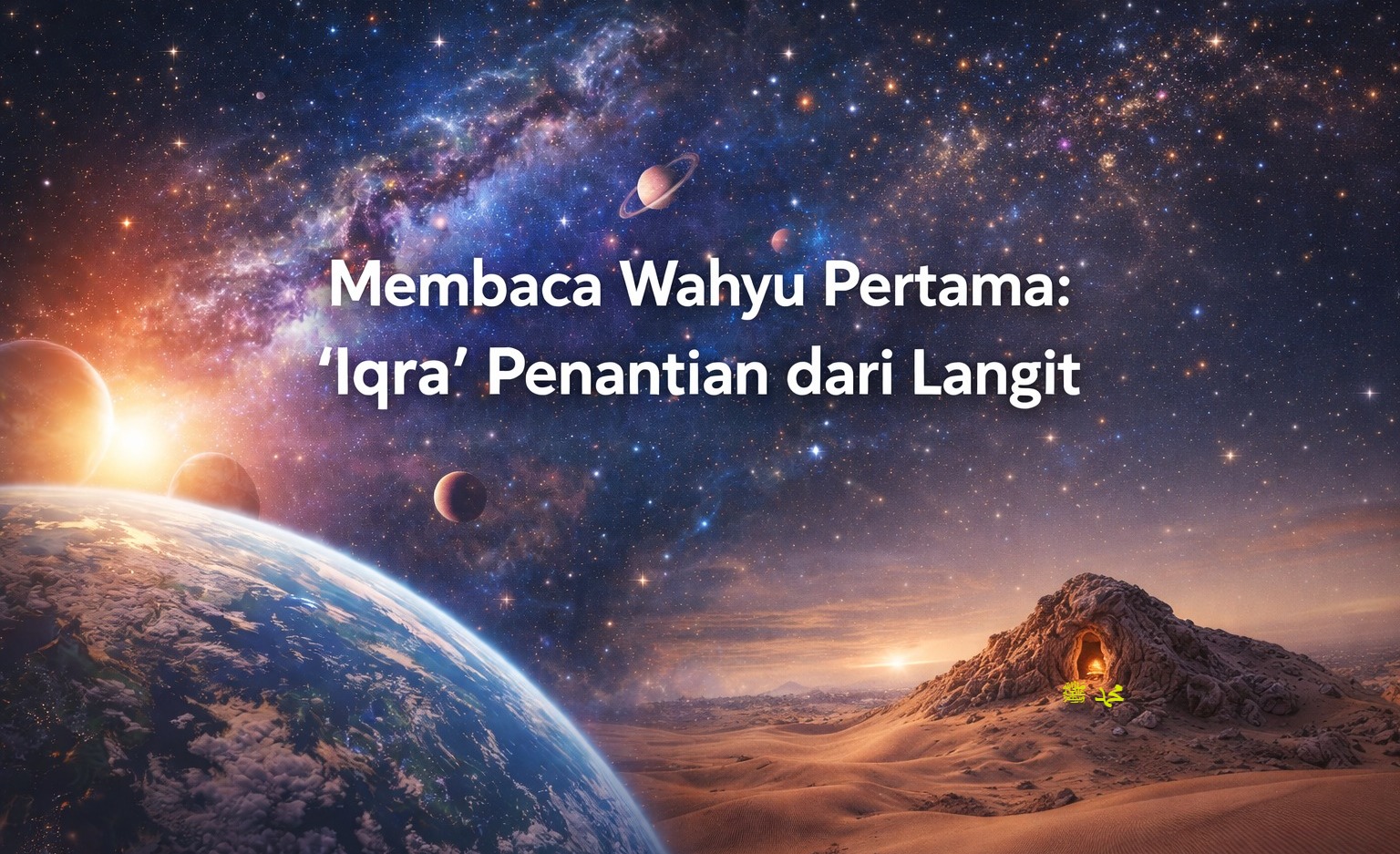
Kordoba Cordoba - In the silence of the Cave of Hira, on a blessed night, human history changed forever. At that time, an ummi man who was in the middle of his prayers suddenly received a great visit.
Sosok cahaya muncul, malaikat Jibril, datang dengan sayap memenuhi langit, lalu terdengar suara yang mengguncang jiwa namun menentramkan: “Bacalah!”
The man, Muhammad ﷺ, answered innocently, “I cannot read.” The same command and answer were repeated three times, before the angel finally delivered the first revelation:
“Bacalah dengan (menyebut) nama Tuhanmu Yang menciptakan. Dia telah menciptakan manusia dari segumpal darah. Bacalah, dan Tuhanmulah Yang Maha Pemurah. Yang mengajar (manusia) dengan perantaraan kalam. Dia mengajarkan kepada manusia apa yang tidak diketahuinya.” (QS. Al-‘Alaq: 1-5).
Inilah momen monumental: “Iqra” (Bacalah) menjadi kata pembuka dari risalah abadi. Ia bukan sekadar perintah membaca huruf, tapi sebuah undangan Ilahi untuk membaca alam semesta, membaca diri sendiri, membaca sejarah, peradaban dan membaca takdir—semuanya dengan nama Allah.
The revelation that came down was not a product of human culture or contemplation, but rather the direct word of the Creator. The eternally preserved Word of God.
Secara bahasa, ‘wahyu’ berarti pemberitahuan atau isyarat yang tersembunyi dan cepat. Dalam term Islam, wahyu adalah cara Allah menyampaikan hukum, bimbingan, dan firman-Nya kepada para Nabi dan Rasul.
He is a pure source of knowledge and law, distinguishing a prophet from other humans. Allah says:
“Sesungguhnya Kami telah memberikan wahyu kepadamu (Muhammad) sebagaimana Kami telah memberikan wahyu kepada Nuh dan nabi-nabi setelahnya.” (QS. An-Nisa’: 163).
Ini menegaskan kesatuan sumber wahyu seluruh Nabi. Namun, Al-Qur’an sebagai wahyu terakhir memiliki keistimewaan: ia adalah Kalamullah yang munazzal (diturunkan secara langsung) dalam bahasa Arab yang murni, terjaga keasliannya, tanpa campur tangan malaikat dalam penyusunan bahasanya, apalagi syaitan.
The process of receiving revelation from the Prophet Muhammad (peace be upon him) was a very difficult physical and spiritual experience. Sometimes the Angel Gabriel appeared in human form, sometimes the voice of revelation came like the jingling of bells—this was the most difficult.
Aisyah radhiyallahu ‘anha menggambarkan: “Aku pernah melihat wahyu turun kepadanya di hari yang sangat dingin. Namun, ketika wahyu itu selesai, keningnya selalu penuh dengan keringat.” (HR. Bukhari).
This proves that revelation is a real experience, miracles are not just inner inspiration.
Setelah wahyu pertama, datang masa fatratul wahyi (kekosongan wahyu) yang terasa lama dan mencemaskan bagi Nabi ﷺ. Hingga pada suatu hari, beliau melihat Jibril dalam wujud aslinya di ufuk langit.
This event marked the beginning of the second revelation, QS. Al-Muddatsir, which contained the command to begin preaching openly.
Since then, revelations have come down gradually over 23 years, adapting to events and answering questions as they arise.
Setiap ayat turun, Rasulullah ﷺ langsung menghafalkannya dan memerintahkan para sahabat pencatat wahyu (kuttab al-wahyi) seperti Zaid bin Tsabit untuk segera mendokumentasikannya di atas pelepah kurma, kulit, batu, dan tulang.
Proses talaqqi (mendengar langsung dari lisan Nabi), hafalan dan penulisan inilah yang menjadi jaminan keotentikan Al-Qur’an.
The Prophet's patience in waiting for revelation to answer a problem - such as in the case of false accusations against Aisyah who waited for the revelation of the QS. An-Nur—shows that he cannot make up his own revelations. He is just a faithful transmitter.
Amidst today's information overload, rife with distortion, the message of "Iqra" is increasingly relevant. But what kind of "reading" is meant?
1. Membaca dengan Nama Tuhan (Bismi Rabbik): Ini adalah kunci. Membaca Al-Qur’an, membaca ilmu pengetahuan, membaca kehidupan, harus dimulai dengan mengingat Sang Pemberi Ilmu. Ini melahirkan sikap tawadhu, bahwa semua ilmu bersumber dari-Nya.
2. Membaca yang Melahirkan Aksi (Al-Qalam): Wahyu pertama menyebut “qalam” (pena). Membaca yang hakiki harus menghasilkan “tulisan”—yakni perubahan dalam diri, catatan amal baik, dan kontribusi nyata bagi peradaban.
3. Reading to Get to Know the Unknown: The ultimate goal of reading revelations and kauniyah verses is to expand the horizons of faith and knowledge, revealing the never-ending greatness of Allah.
The claim of some orientalists that the Qur'an is the result of the Prophet's genius intuition is refuted by the facts:
· Kondisi Psikologis Nabi: Reaksi ketakutan, kegelisahan, dan fisik yang terbebani saat wahyu turun pertama kali menunjukkan ini adalah pengalaman eksternal yang diterima, bukan karya sendiri.
· Sifat Ummi Nabi: Bagaimana mungkin seorang yang tidak bisa membaca dan menulis (ummi) menghasilkan karya sastra dengan kedalaman linguistik, hukum, sejarah, peradaban dan kosmologi yang tak tertandingi?
· Tantangan Abadi: Al-Qur’an sendiri menantang siapa pun untuk membuat satu surat saja yang semisal. Faktanya, para sastrawan Arab terhebat sekalipun tak mampu menjawabnya.
Ini membuktikan wahyu bersifat metahistoris—melampaui ruang, waktu, dan kapasitas manusia.
Revelation is light descending from heaven, while poetry, verse, and philosophy are the sparks of fire from the earth. They have different sources and substances.
Ketika Jibril memeluk Nabi ﷺ hingga tiga kali dan menyuruhnya membaca, di situlah Allah mengajarkan bahwa jalan menuju-Nya dimulai dari membuka lembaran baru.
Reading the revelations of the Qur'an is not a passive ritual, but an active dialogue with the Creator.
The revelation of the early Quran is the greatest gift. Let's answer the call of "Iqra" faithfully: reading the mushaf with tadabbur, reading nature with tafakkur, and writing the best works with the ink of faith.
Because, in every era, revelation is always waiting to be read, turned on, understood and practiced with a heart that longs for guidance.
And God knows best

.jpeg)


